
People & Equipment: Jaynes Concrete Self-Perform
Inside Jaynes’ concrete self-perform division, experienced craftspeople, emerging leaders, and equipment investments are helping the team take on demanding work together.
In Carlsbad, a large, complex concrete placement at the Twin Buttes school project in Zuni, New Mexico, can blend into other equally large projects at a college or elementary campus in the state in the same week.
For Noah Lucero, Concrete Operations Project Manager; Charles Hunt, Building Concrete Foreman; Roberto Miramonte, Mason Foreman; and Jacob Clark, Concrete Operations Project Manager, that pace has become familiar.
In a recent discussion, the team described work at Carlsbad Middle School, Southeast New Mexico College, and Sunset Elementary, with additional placements across other Jaynes projects.
Keeping that work moving takes people who know their craft. It also takes attention to what those people need to keep doing it well.
For the Jaynes concrete self-perform division, those priorities are closely connected. The team members interviewed described an organization that invests in equipment, shares knowledge, and actively creates opportunities for people to grow. Their accounts show that self-perform at the working level, at the project site, means Jaynes employees placing and finishing concrete, supporting one another, and taking personal pride in the result.
Investing in the people doing the work
Ask the team about technology, and the conversation quickly turns to the physical demands of concrete work.
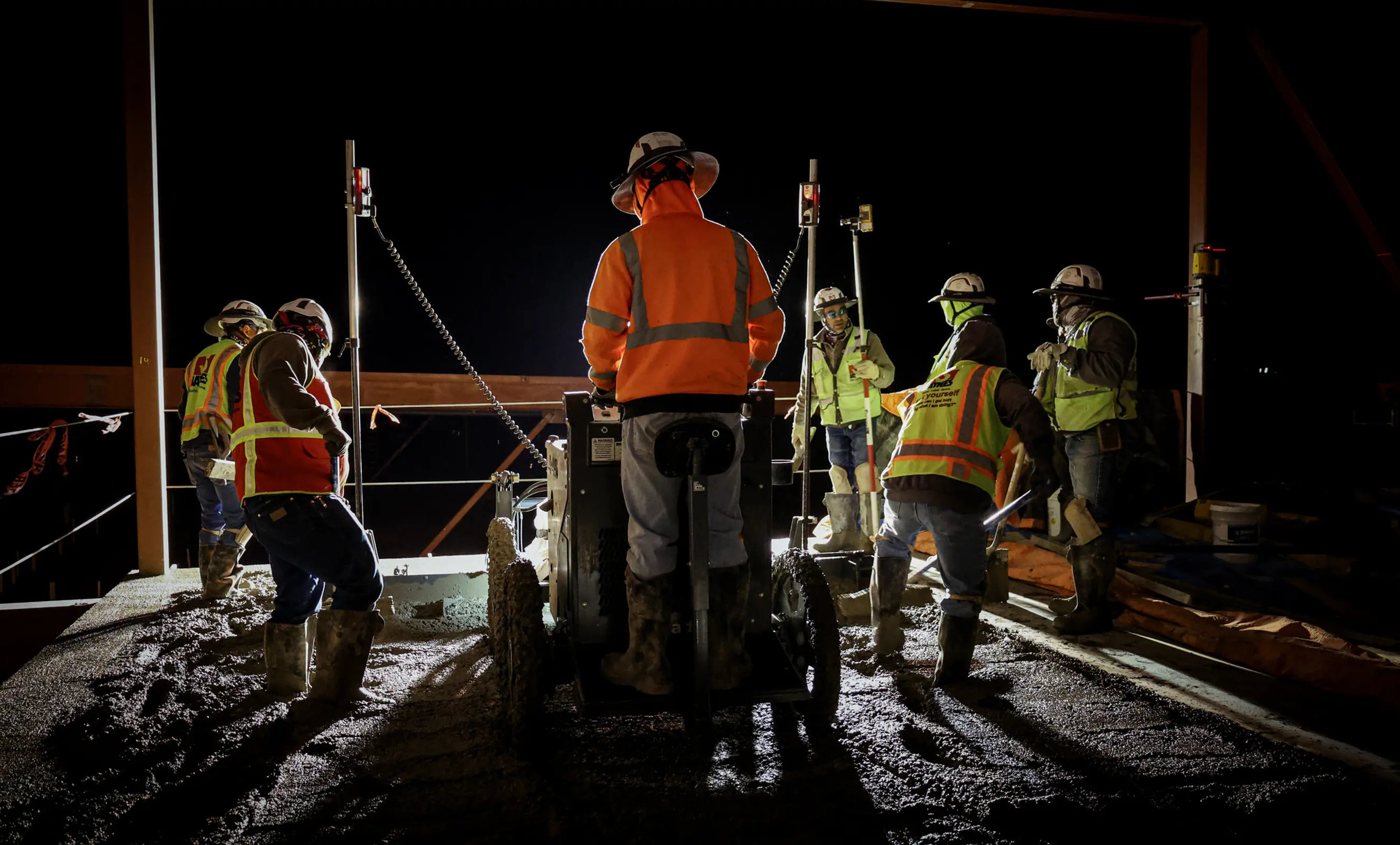
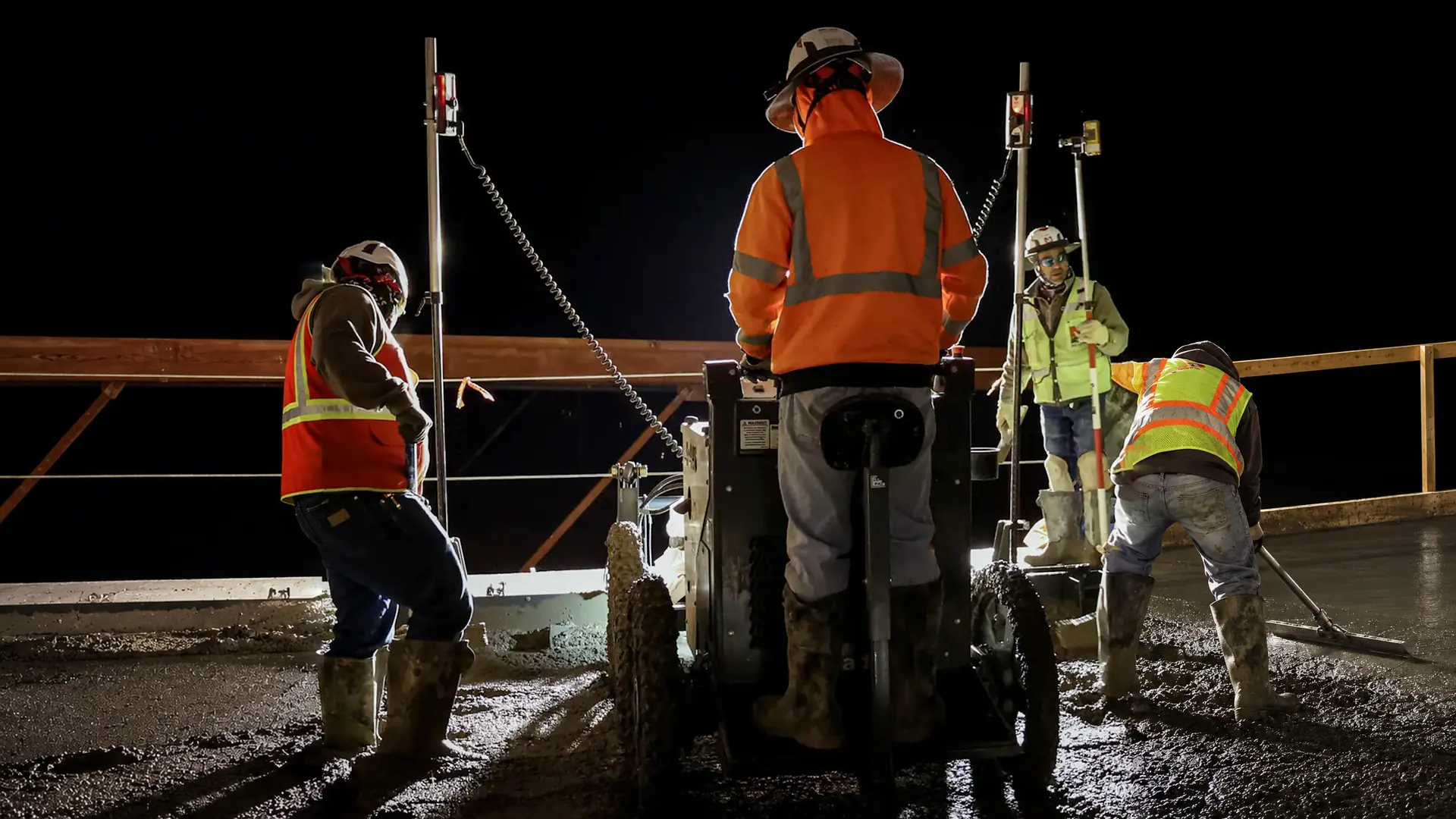
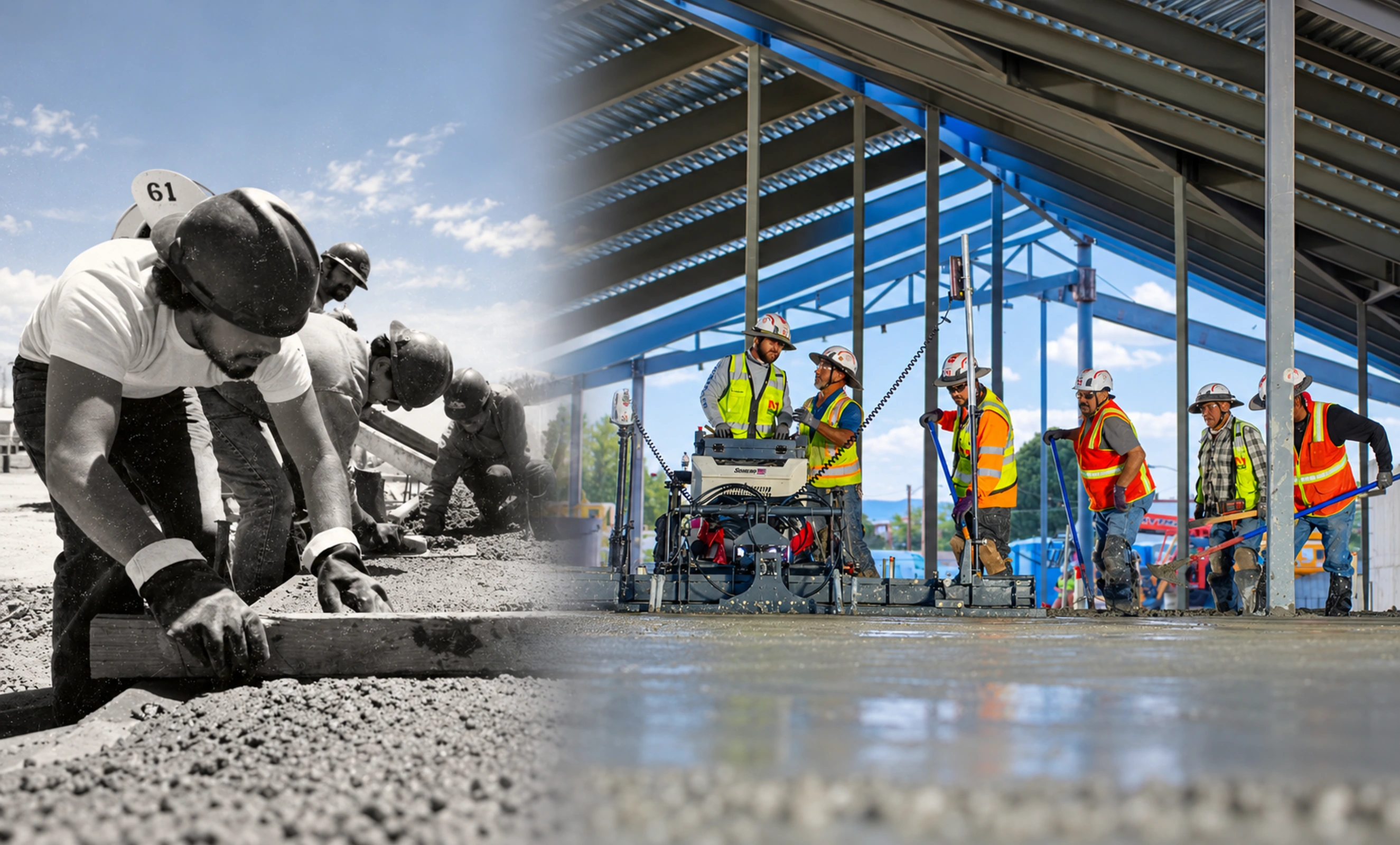
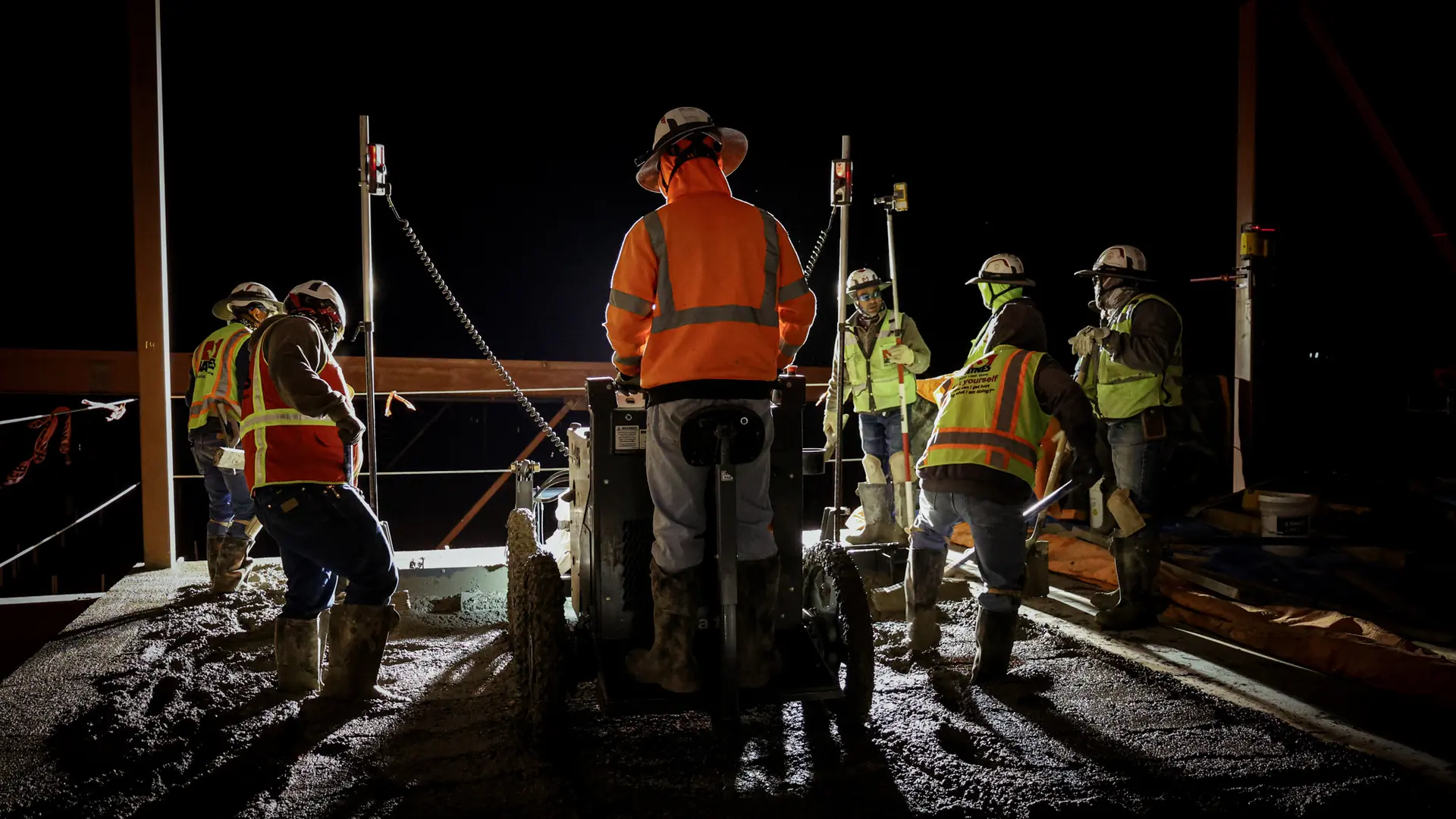
Noah Lucero described how a laser screed helps crews place concrete with less manual pulling. Charles explained that equipment gives his finishers more capacity to handle larger placements. For him, the benefit is practical: matching the work ahead with the people and tools available.
Asked to estimate the efficiency improvement using a laser screed, Charles put it at approximately 40%. He described moving from hand placements of approximately 6,000 square feet to larger placements with equipment supporting the crew.
In a discussion on Jaynes’ self-perform capabilities, Jacob Clark, Concrete Operations Project Manager, sees equipment decisions through that same lens. Some investments, he explained, primarily help the people doing the work. Others support both employees and production.
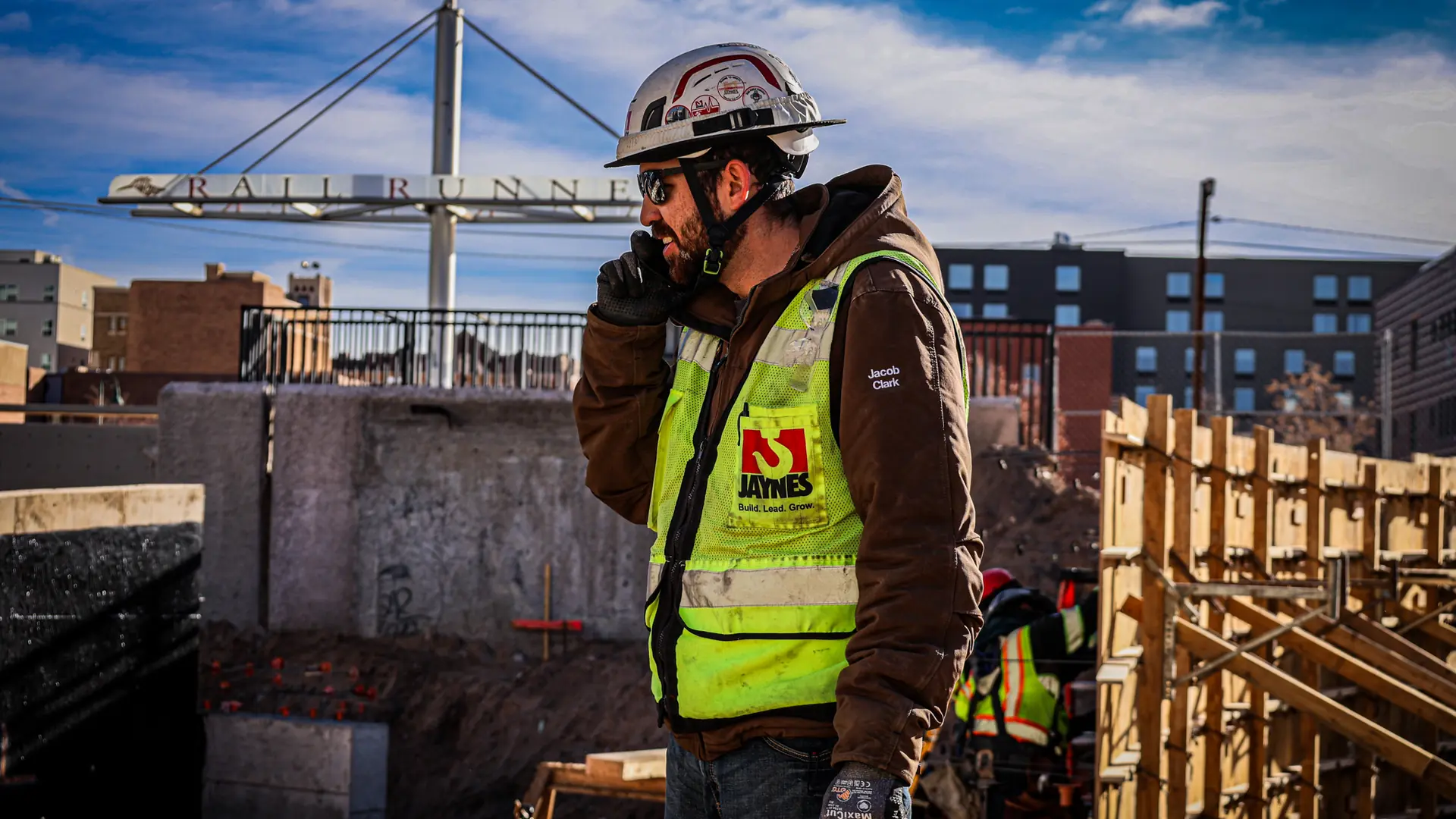
The laser screed is one example. Clark emphasized its value in reducing the need for workers to bend over and drag boards to screed concrete. He also described a curb machine as an investment that supports the crew while increasing production.
“We can do double with the same amount,” Clark said of the curb machine. Roberto Miramontes, Charles Hunt, Noah Lucero, and Jacob Clark all agree the new technology accelerates project delivery.
The team is also looking for ways to learn more about the tools already available. Lucero described equipment training and interest in bringing field employees into future technology discussions through attendance at the trade show World of Concrete.
Craftsmanship still leads
Lucero was careful when asked whether machines automatically produce better quality.
“Our Finishers are really solid,” he said. But he goes on to explain that the team can achieve required floor flatness and levelness faster with the new technology than with hand placement. The laser screed adds value when a project calls for tighter tolerances, helping skilled crews meet more demanding requirements quickly.
His answer puts the equipment in perspective. The finishers bring their knowledge and education. The tools support their ability to apply it.
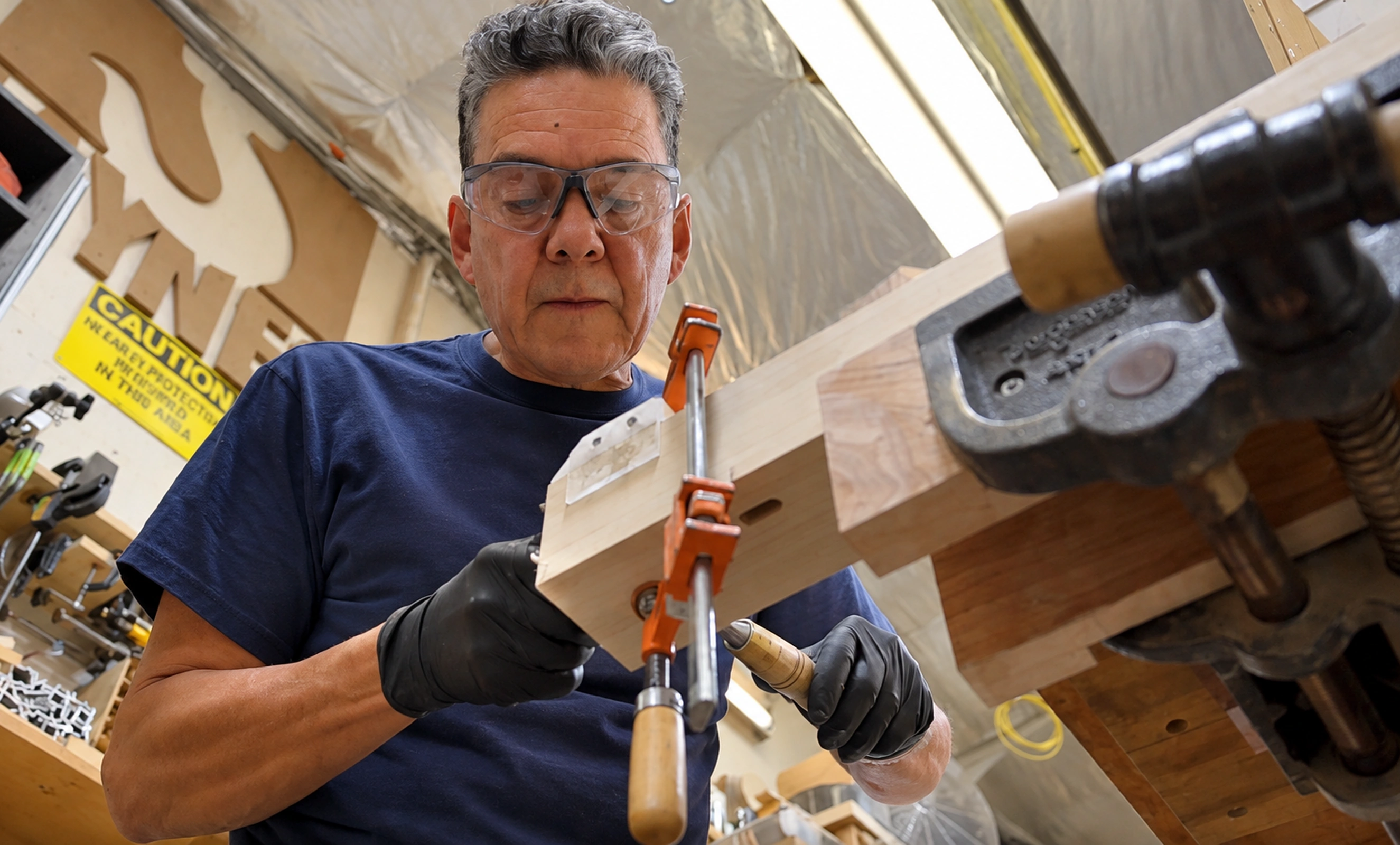
That respect for experience also shows up in how team members describe learning. Charles pointed to the willingness of coworkers to teach and to the range of experienced people available to learn from.
“Pretty much everybody here is more than willing to teach you everything they know,” he said.
For someone considering concrete work, that offers a picture of the learning environment: people developing their skills alongside coworkers who are willing to share what experience has taught them. Coaching, mentorship, and knowledge transfer are valued at Jaynes.
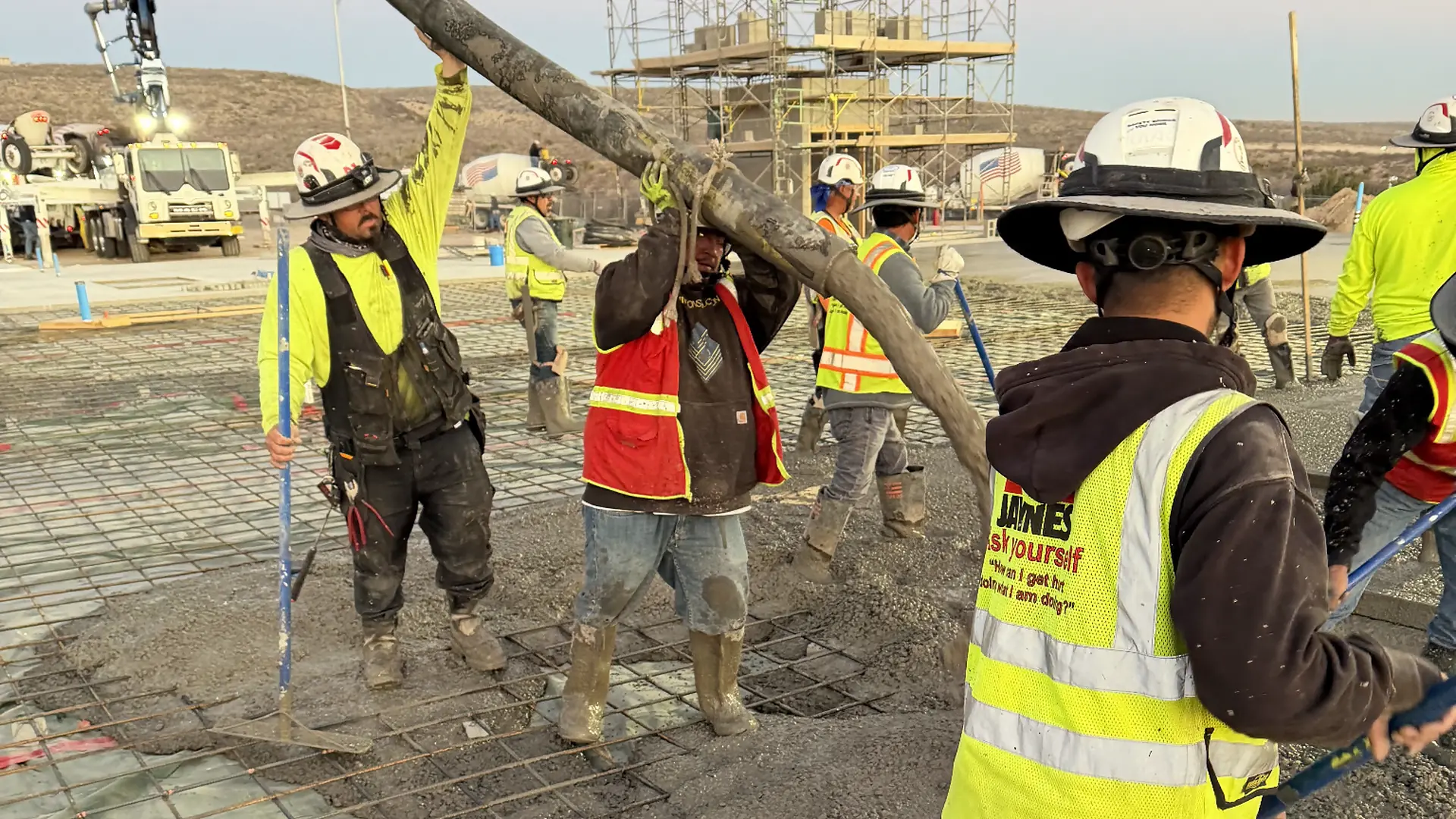
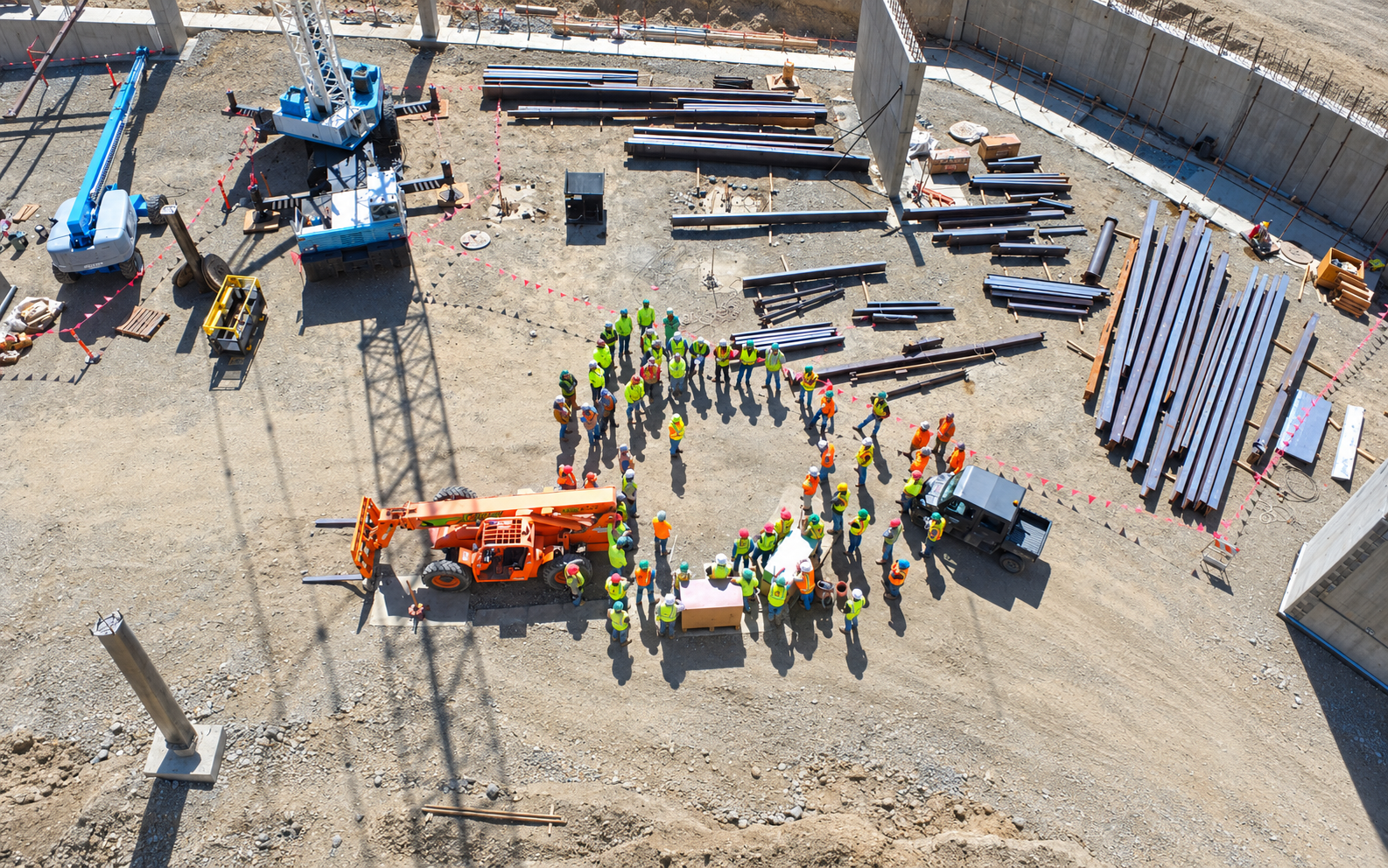
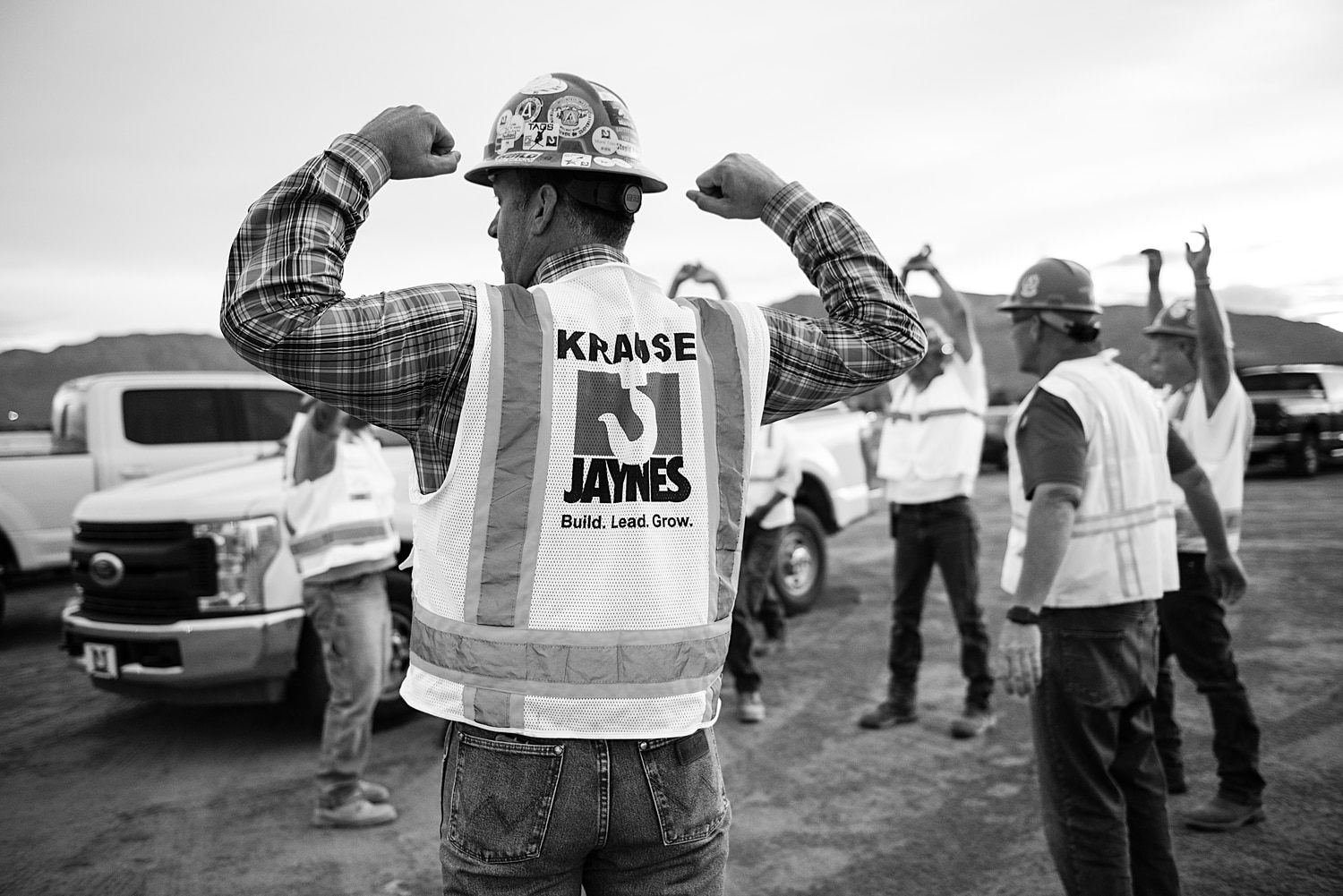
The Jaynes Concrete Team at work for owner Zuni Public School District
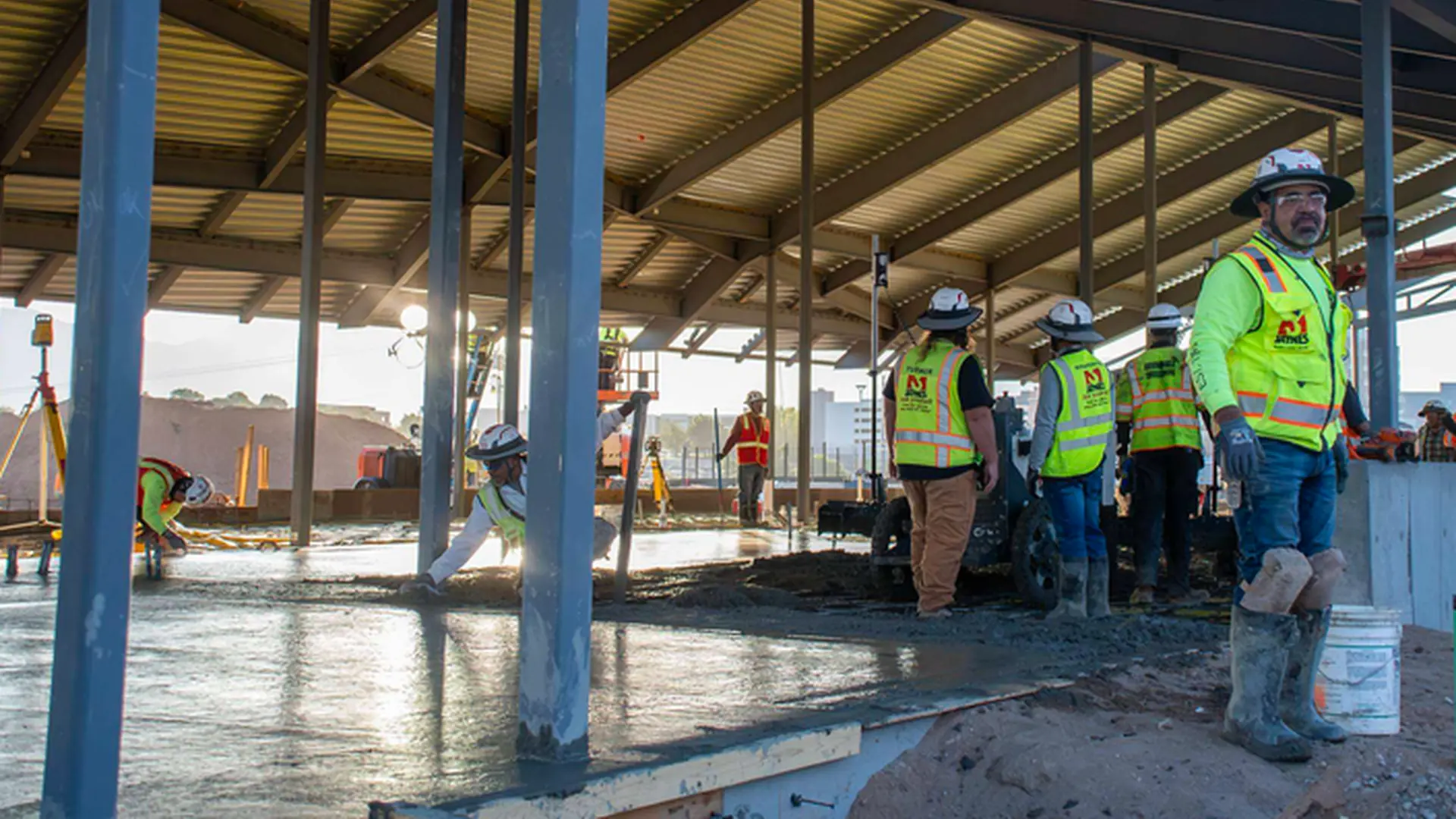
Jaynes is the construction manager at risk for the Zuni Public School District project, which brings Zuni Middle School, Zuni High School, and Twin Buttes High School together in one modern replacement facility. Jaynes is building the new school on the existing high school site. The district planned early work to prepare the site and add teacher housing ahead of school construction. The broader project includes an athletic complex.
The pour offers a look at what it means for Jaynes to self-perform concrete. Jaynes employees place and finish the concrete, and the company invests in equipment to support that work. On the job, that investment changes what a crew can take on in a shift and what its people need to know to keep a placement moving.
Different paths into the same team
Jaynes' Concrete Division brings together people with very different starting points.
Roberto Miramontes has been with Jaynes for 31 years. Asked what keeps him coming back, he said he knows his coworkers, feels comfortable with a collaborative, steady team, and appreciates the people he works for.
Charles Hunt, recently passing the decade mark at Jaynes, said what stood out to him about his tenure was his team's motivation and cooperation. He also mentioned how Jaynes values people and promotes a respectful work culture. When work appeared uncertain, he recalled Jaynes finding him a position elsewhere rather than simply letting him go.
Lucero arrived through another route. Before joining Jaynes, he served in the Army, working on helicopter electrical and computer systems. He described the transition into the company as an easy one because the values Jaynes cultivates felt familiar.
“Everyone knows each other,” he said. “Everyone here is rooting for the best for each other and trying to help each other grow.”
Clark found Jaynes through a recruitment email sent to the University of New Mexico School of Engineering. He joined as a project engineer intern while studying construction management, continued working through college, and became a full-time assistant project manager after graduation. Today he’s a Project Manager. He wanted a career that connected planning with the experience of seeing things built. Concrete gave him that opportunity.
Support that shows up every day
Clark described the current workload as the busiest he had experienced during his time with Jaynes. What makes that intensity manageable, he said, is the way people help one another.
“All of us look out for each other,” he said. “All of us help each other out.”
He described coworkers leaning on one another through good weeks and difficult ones. To him, that is what gives The Jaynes Way meaning in everyday work.
A guiding principle and culture staple at Jaynes, The Jaynes Way means setting high standards, putting people first, taking ownership, improving continuously, and serving our customers, partners, and communities.
For prospective employees, these concrete teammates offer several reasons to consider working at Jaynes: access to experienced teachers, equipment chosen with workers in mind, and examples of people building careers through different entry points.
Those opportunities still require effort. Lucero emphasized dedication to learning, while Charles described growth as starting with a willingness to develop.
According to division head Zach Johnson, “Roberto Miramontes, Charles Hunt, Noah Lucero, and Jacob Clark represent what makes Jaynes Concrete successful. They're knowledgeable, educated, proud of the work, and committed to their team. Roberto and Charles bring valuable field knowledge, Noah connects equipment and technology to our crews' needs, and Jacob brings a builder’s mindset to project management. Their contributions help us deliver today while building the next generation of Jaynes Concrete.”
Something to point to
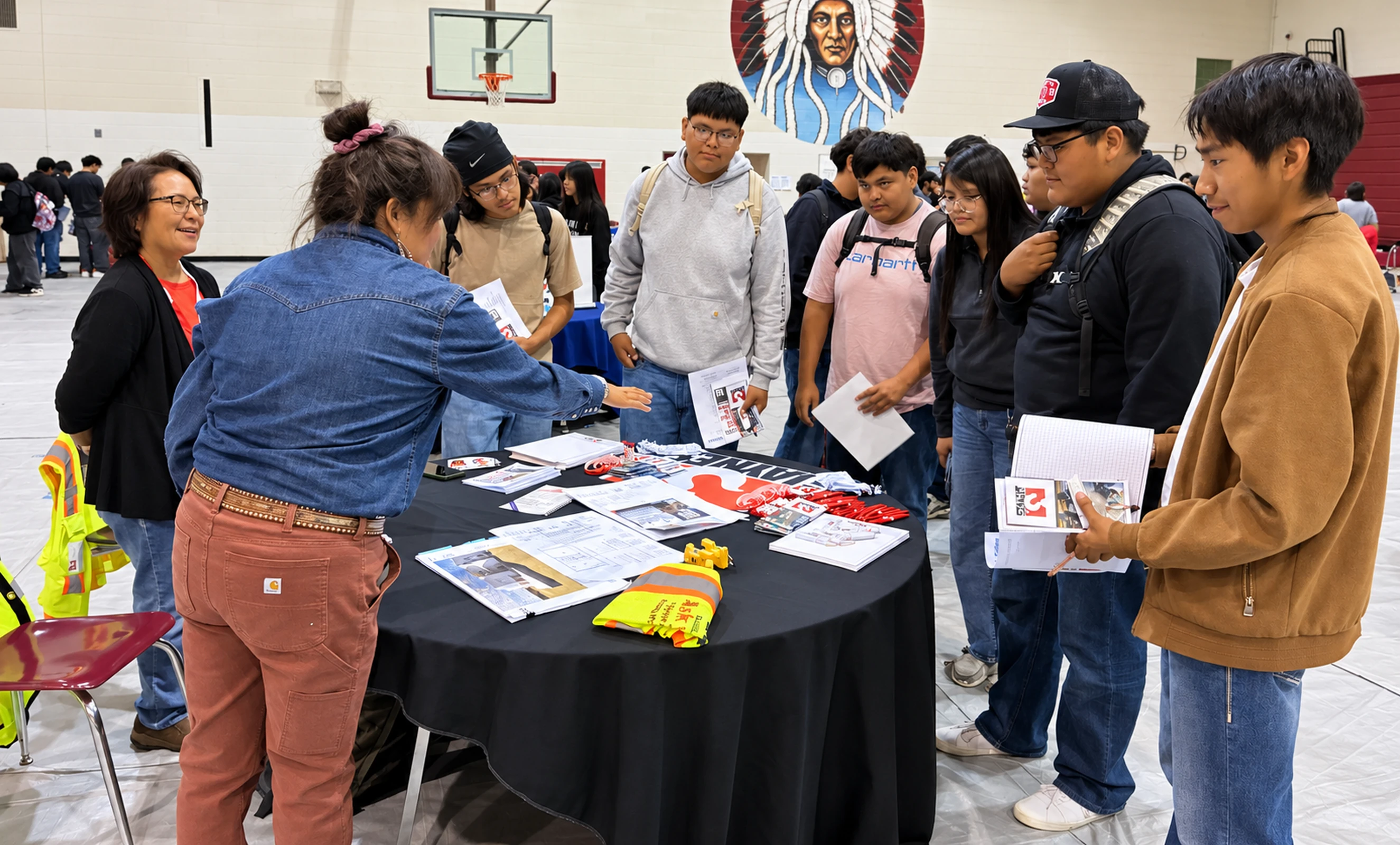
The new school in Zuni will give the Jaynes Concrete team a place they can point to years after they finish their work, a project they helped build side by side. Clark makes that point when he speaks with students considering construction. He asks them to picture driving past a completed project with their family and saying, “My hands helped build that.”
Back in Carlsbad, the next placement brings another opportunity to earn that feeling of pride. The work ahead for the concrete . The investment Jaynes places in its employees reaches into the future, to the people who place it, the knowledge they pass along, and the careers they build together.
For 80 years, Jaynes has been a great place to work. Explore concrete careers at Jaynes.

Insights













Durango, CO 81301
Las Cruces, NM 88001